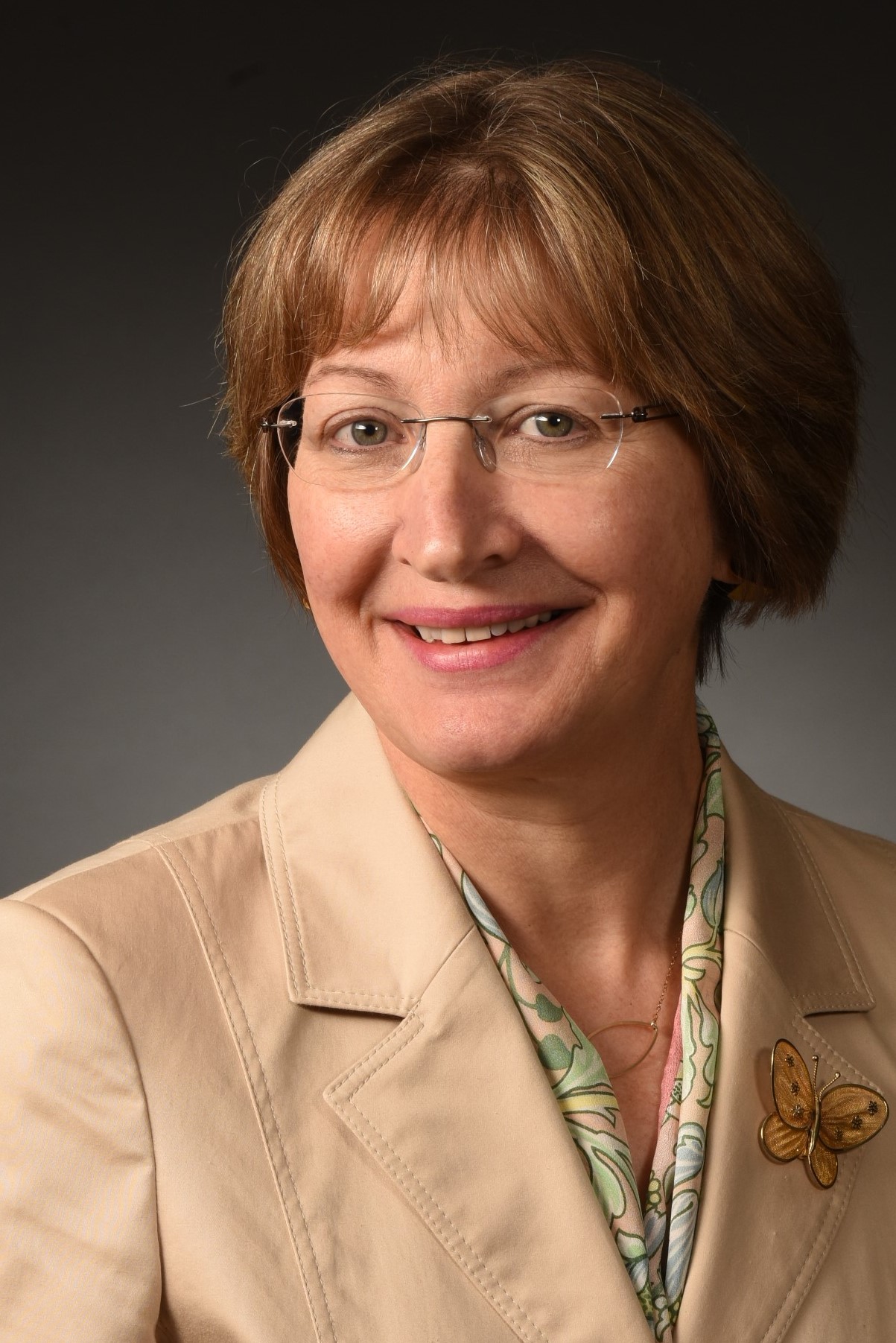
Mercyhurst University Names Kathleen Getz as Their 13th President

kathleen getzMercyhurst University announced Tuesday, May 11, 2021, that the Board of Trustees has voted to name Kathleen A. Getz, Ph.D., the university’s 13th president. She will begin her tenure July 12, 2021.

Getz is a mission-driven servant leader with 18 years of senior experience in major business schools, including 10 years at Catholic universities. Since 2015, she has served as dean of the Sellinger School of Business and Management at Loyola University Maryland, a Jesuit Catholic institution whose business school is home to nearly 2,000 students, 55 full-time faculty, and 13 full-time staff. From 2011 to 2014, she was dean of the Quinlan School of Business at Loyola University Chicago, one of the largest Catholic universities in the United States.

Previously, she was senior associate dean for academic affairs at the Kogod School of Business at American University from 2006 to 2011 and chair of the Department of Management from 1999 to 2002. She also served as a professor of management at all three institutions.

Getz is the recipient of many awards, including being named one of Maryland’s Top 100 Women for 2018.

“After a robust national search that yielded a diverse and talented pool of candidates, Dr. Getz emerged as a passionate and accessible leader who we believe is ideally suited to lead Mercyhurst into the future,” said Interim President Joseph G. NeCastro. “Dr. Getz brings extensive experience in values-based education, business acumen, interdisciplinary collaboration, new program development, community engagement, innovation and entrepreneurship, fundraising, and diversity and inclusion.”

This marks the first time a woman has led Mercyhurst in nearly 50 years – since the 1963-1972 tenure of Sister Carolyn Herrmann, RSM, Ph.D., who was preceded in that role by six Sisters of Mercy, starting with Mother Borgia Egan, RSM, in the year of the university’s founding, 1926.

An enthusiastic and successful fundraiser, Getz raised nearly $80 million over 10 years at two different universities. She is experienced with capital campaigns, annual and planned giving, cultivation, stewardship, special projects, and other development/advancement efforts.

She has expertise in identifying new revenue streams, reducing overall costs, and redirecting resources to achieve better results. She is also known for her influence in bringing together diverse efforts and populations toward common goals, such as accreditation and implementing new curricula.

In terms of community engagement, Getz has been actively involved with the Results Baltimore Impact Network, a group of 150 Baltimore-area leaders committed to developing and implementing an effective response to Baltimore’s social and economic challenges. She also serves or has served on the boards of Conscious Ventures Lab, the Economic Alliance of Greater Baltimore, Junior Achievement of Central Maryland, and St. Mary’s Seminary and University.

Getz earned a Bachelor of Science in Human Development from Pennsylvania State University, an M.B.A. from Gannon University, and a doctorate in Business Environment and Public Policy from the University of Pittsburgh.

She is quite familiar with Erie, where she and her husband, Gary, lived for several years. She worked as an assistant manager and retail lending officer at Mellon Bank from 1981 to 1986. She was also a member of the St. Patrick Parish Choir, and volunteered at St. Patrick’s Haven from 1989 to 1990.

Upon returning to Erie, she and her husband will be taking up residence at The Kern House on upper State St., which marks the first time the recently acquired presidential residence will actually be home to a Mercyhurst president. They are the parents of one grown son, Dietrich, who lives in Lynchburg, Virginia, with his wife, Dr. Christen Laughorn.

Getz’s selection was the result of an extensive search conducted over the past five months by an 18-member committee under the leadership of Trustees and co-chairs Stephen J. Fiedler and B. Scott Kern.  The committee included representation from the Sisters of Mercy, Trustees, alumni, students, faculty and staff, with guidance from nationally recognized search firm RH Perry & Associates.

Getz succeeds Michael T. Victor, who served as university president from 2015 until early 2021.

“I am confident that we have selected a strong new leader for the university, one who will preserve the tradition of excellence at Mercyhurst while advancing our efforts to innovate and thrive in today’s highly competitive higher education marketplace,” NeCastro said.

NeCastro will continue to serve as interim president until Getz begins her tenure. At that time, NeCastro will resume his position as chair of the university’s Board of Trustees.

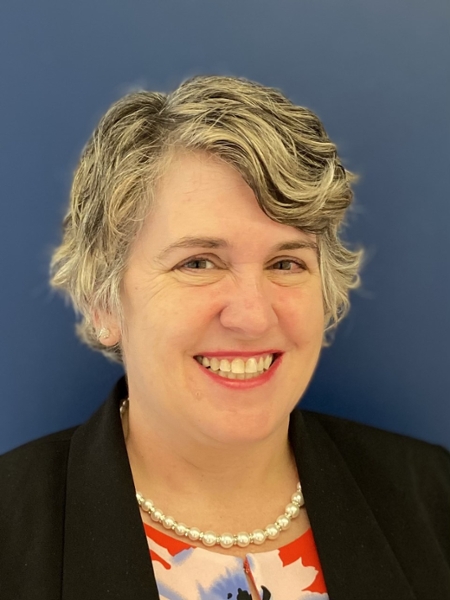
Northland Community and Technical College Names Sandra Kiddoo as Their Next President


Photo of Sandra Kiddoo

ST. PAUL, Minn., April 21, 2021 – The Board of Trustees of the Minnesota State Colleges and Universities has named Sandra Kiddoo to serve as the next president of Northland Community and Technical College. The appointment will become effective July 1, 2021.

“Dr. Kiddoo’s leadership style is inclusive, transparent, and collaborative,” said Devinder Malhotra, chancellor of Minnesota Stat

e. “She has a strong track record of exploring new initiatives to provide the services and programs students and industry need for today and tomorrow. I am confident that Northland Community and Technical College will thrive under her leadership.”

Kiddoo is a senior level higher education professional with a record of success in college and state agency settings. She has advocated for the mission of community colleges, both as cost effective and high-quality options for students, and as integral to economic and workforce vitality.

Since 2018, she has served Hazard Community and Technical College (HCTC), a comprehensive community college offering both technical and transfer degree programs with an annual enrollment of over 3,000 students across three campuses and three additional locations. As the chief academic officer, her responsibilities include providing leadership for academic programming and developing and implementing a strategic academic master plan to ensure high quality programming and student success. Her accomplishments at HCTC include creating a long-term facility plan, obtaining $9 million in grant funding for a Manufacturing and Construction Center of Excellence, implementing the K-Tech competency-based youth apprenticeship model, and adding programs in manufacturing that will help diversify the regional economy.

Before joining HCTC, Kiddoo served from 2015 to 2018 as vice president of academics at Mid-State Technical College (WI), a member of the Wisconsin Technical College System with an annual enrollment of over 2,600 students across three campuses and one center. In this capacity, she led the academic programming, adult basic education, workforce and continued education, institutional research, accreditation, and grants functions of the college. Her accomplishments included developing and implementing strategic and educational master plans, increasing access for students through online delivery technologies, engaging innovative instructional technologies, increasing workforce development initiatives, and developing and implementing new associate degree programs.

Previously, she served the Wisconsin Technical College System from 2007 to 2015 initially as education director for transportation and electronics, and later as associate vice president of instruction, providing academic leadership throughout the system of 16 technical colleges.

She holds a bachelor’s degree from the University of Wisconsin-Green Bay, a master’s from Capella University, and a doctorate from the University of Wisconsin-Madison.

Kiddoo succeeds Dennis Bona who served as president of Northland from 2015 to 2020 and retired December 2020.

About Northland Community and Technical College
Northland Community and Technical College (Northland) is a comprehensive college with campuses in Thief River Falls and East Grand Forks, Minnesota. Northland also has an aerospace site in Thief River Falls and a satellite site in Roseau. The college offers certificates, diplomas, transfer courses, two-year degrees (A.A.S., A.S., A.A.) in more than 80 areas of study, workforce training, and education programs.

### 

Minnesota State includes 30 community and technical colleges and seven state universities serving approximately 340,000 students. It is the third-largest system of two-year colleges and four-year universities in the United States.

Northeast Higher Education District Names Michael Raich as Their Next President

Michael-Raich.jpg

St. PAUL, Minn., April 21, 2021 – The Board of Trustees of the Minnesota State Colleges and Universities has named Michael Raich to serve as the next president of the Northeast Higher Education District (NHED). The new appointment becomes effective immediately.

“Dr. Raich has consistently demonstrated that he is a strategic leader,” said Devinder Malhotra, chancellor of Minnesota State. “He understands that in order to move forward, it is important to work in a collaborative, transparent, and authentic manner, and build on a shared vision – a vision that will ensure the success of all students and the region. With Dr. Raich at the helm, the Northeast Higher Education District is well on its way to charting this collective, shared future.”

Raich has served as the interim president of NHED since 2019, providing strategic vision for the NHED colleges, advancing their mission and core values, and growing his deep connections throughout the Iron Range community.

Throughout the COVID pandemic, Raich led a consistent and safety-first response to the crisis, working with campus teams to successfully carry out their action plans: the NHED colleges have seen minimal campus virus spread while campus services and select in-person classes have continued. This has allowed students to continue their progress towards their educational goals.

As interim president, Raich has also been leading the process to merge the five independently accredited NHED colleges into one accredited college. Through a process called Vision NE, he has engaged NHED constituents and stakeholders including students, employees, bargaining units, legislators, and members of the community, as well as The Board of Trustees of the Minnesota State Colleges and Universities and the Higher Learning Commission. This process is on track with the goal of operating under the new model starting in Fall 2022.

Prior to being named interim president of NHED, Raich served Hibbing Community College as provost and as dean of Academic Affairs and Student Services, and he served Itasca Community College as interim provost. His accomplishments in higher education include collaborating with faculty and industry to develop and implement innovative academic programs in high demand sectors, implementing best practices for student success, and solidifying partnerships with area high schools. As a former high school teacher, athletic director, and principal, Raich is well connected to the K-12 environment. Raich serves on multiple regional boards that support K-12, business/industry, and non-profit partners.

Raich holds a bachelor’s degree from the University of Minnesota Duluth, a master’s from St. Cloud State University, and a doctorate from the University of North Dakota.

Raich succeeds Bill Maki, who served as the president of NHED from 2015 until 2019 and now serves as the Minnesota State vice chancellor for finance and facilities.

With approval by the Board of Trustees, the chancellor is authorized to negotiate a three-year contract with Dr. Raich that will become effective July 1, 2021.

About the Northeast Higher Education District
NHED consists of five autonomous yet interdependent colleges in northeast Minnesota: Hibbing Community College, Itasca Community College, Mesabi Range College, Rainy River Community College, and Vermilion Community College. The district has a total of six campuses in Ely, Eveleth, Grand Rapids, Hibbing, International Falls, and Virginia. The colleges are deeply integrated in the communities they serve and play a vital role in the educational, cultural and economic well-being of the region. A rich mix of programming, including specialty programs in environmental and natural resources fields, appeal to students nationally and internationally. The district has a total annual enrollment of approximately 5,600.

### 

Minnesota State includes 30 community and technical colleges and seven state universities serving approximately 340,000 students. It is the third-largest system of two-year colleges and four-year universities in the United States.

Verified by MonsterInsights